
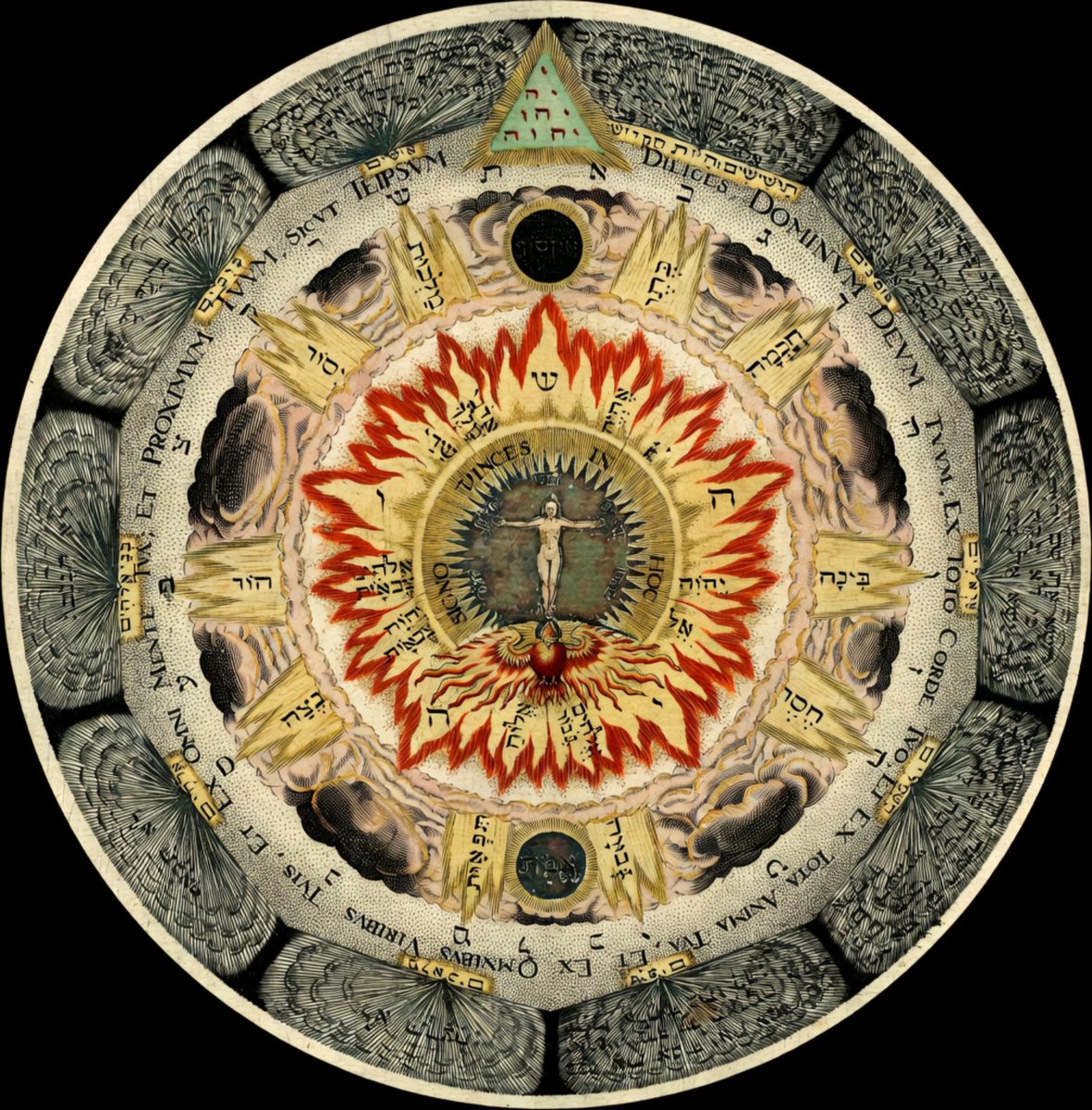
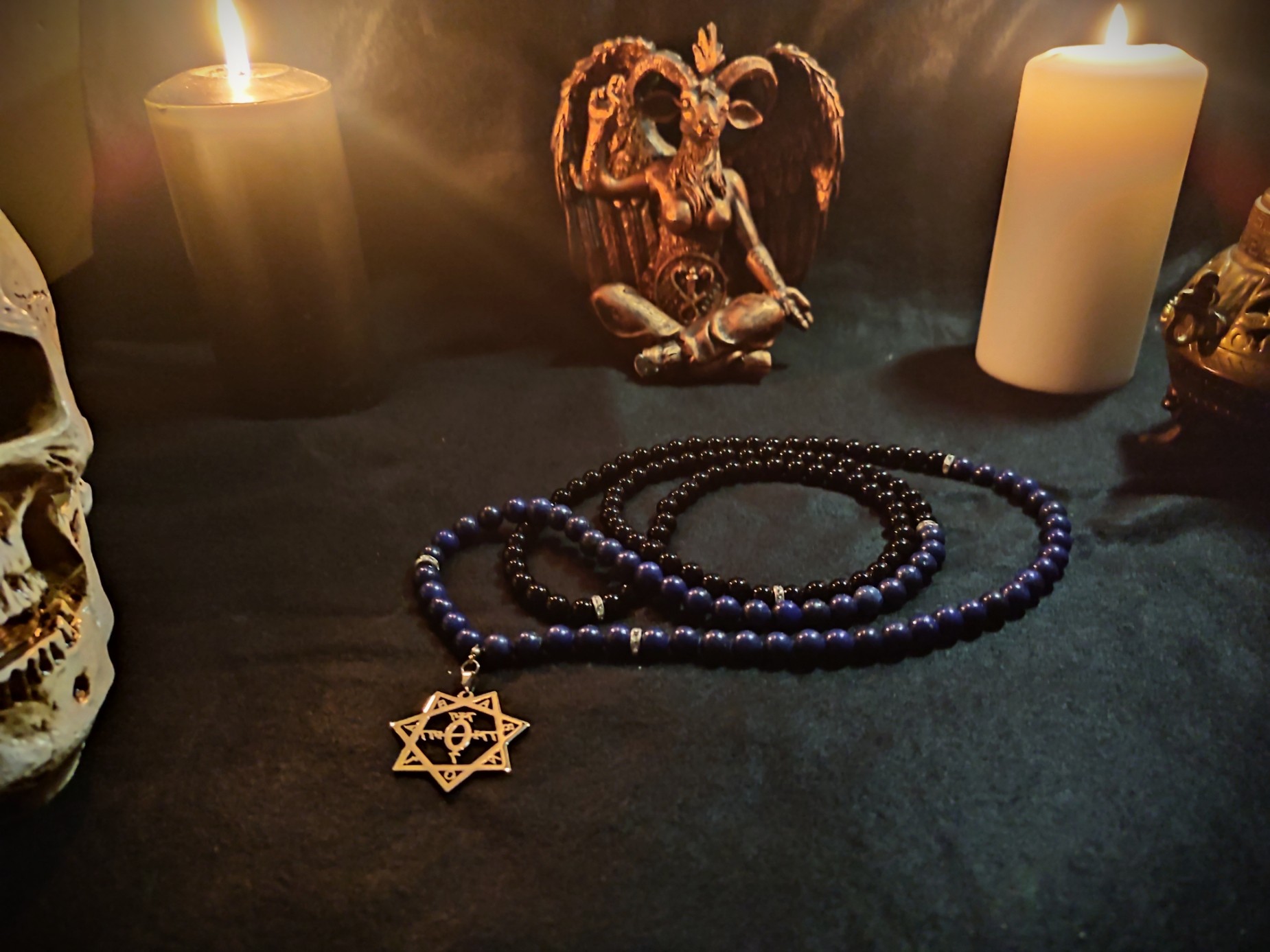
Ritual Mediation, Correspondence, and the Transformation of Consciousness
Prayer beads are among the simplest ritual technologies found across religious traditions. Their apparent simplicity, however, conceals a sophisticated relationship between material objects, repetitive prayer, embodied attention, symbolic correspondence, and altered states of consciousness. In the Western esoteric context, this relationship becomes particularly significant when prayer beads are understood not merely as mnemonic devices, but as theurgical tools.
Prayer beads definitely can be used explicitly within a Theurgic and Hermetic framework, or integrated into Pagan or other spiritual devotional paths, meditative, and ritual practice.
The central question, therefore, is not simply why people count prayers with beads, but what happens when counting, material symbolism, ritual repetition, and devotion are deliberately integrated into a single operative structure.
Prayer Beads as Ritual Technology
The first point to establish is that prayer beads are not merely passive objects. In both approaches, they function as a form of ritual technology.
Pagan rosaries are tools that provide systems for their design, construction, and use across different Pagan contexts, including Druidic and Wiccan practice. Their treatment therefore places the rosary within a broader field of devotional and ritual technologies in which physical objects structure attention and facilitate repeated practice.
For the Theurgist and Hermetists, the rosary can serve as an instrument through which meditation, prayer, breathing, visualization, sacred words, and ritual intention are coordinated. Prayer beads can be used with the theurgic intention of contacting divine powers.
The significance of the beads consequently lies not only in their physical construction but in the relationship established between material form and intentional practice.
A bead is touched, counted, named, and associated with a particular prayer or divine principle. Repetition progressively establishes a correspondence between physical action and interior attention.
The object becomes, in this sense, an externalized structure of consciousness.
Repetition and the Formation of Consciousness
Repetition is fundamental to this process. Moving from bead to bead establishes a rhythmic sequence in which prayer becomes embodied. The practitioner does not merely think the prayer; the prayer is coordinated with touch, breath, movement, vocalization, and temporal rhythm.
This is particularly important from the perspective of esoteric epistemology. Knowledge in many esoteric traditions is not understood exclusively as propositional knowledge. It can also be experiential and transformative. Repeated ritual practice changes the relationship between the practitioner and the symbolic world in which the ritual takes place.
The repeated use of prayer beads is capable of modifying consciousness and of supporting a progressive interiorization of attention. In his account, the beads can become increasingly charged through repeated ritual use, functioning analogously to a repository of accumulated intentional or spiritual force.
Whether one interprets this literally in metaphysical terms or phenomenologically as the conditioning of attention, the ritual structure is significant: repetition converts an abstract intention into an embodied habit of consciousness.
Correspondence and Symbolic Architecture
The theurgical dimension becomes clearer when we consider the construction of the beads themselves.
According to the number of beads, their divisions, materials, colors, shapes, and other structural characteristics can be selected according to the divine power or spiritual objective with which the beads are associated.
This is a direct application of the principle of correspondence, one of the characteristic features identified in the scholarly study of Western Esotericism.
The bead is therefore not merely one unit in a numerical sequence. It may simultaneously function as a symbolic token, participating in a network of associations connecting number, color, material, deity, planetary force, element, season, or other cosmological principle.
This produces what might be called a micro-cosmic ritual.
The complete rosary embodies, in miniature, a particular cosmological order. As the practitioner moves through it, the cosmological structure is not merely contemplated intellectually but enacted sequentially through the body.
Prayer beads consequently provide a particularly clear example of how Western esoteric practice can transform cosmological correspondences into embodied ritual action.
The Theurgic Function
The concept of theurgy is crucial here.
The Greek term theourgia, conventionally translated as “divine work” or “god-work,” refers historically to ritual practices intended to establish or intensify participation in divine realities. In this framework, prayer beads can be understood through this logic of ritual mediation. The object does not replace prayer or divine encounter; rather, it provides a structured medium through which the practitioner directs consciousness toward the divine.
Within Neoplatonic and Hermetic Cosmologies, the cosmos is understood as an emanational hierarchy descending from the One through levels including Nous and the Cosmic Soul toward the material world. Material things can consequently function as symbols and tokens of divine realities. Ritual action works through these relationships of correspondence, tuning the practitioner toward the divine order.
This is an important distinction.
Theurgy is not simply a technique for obtaining something from a deity. Its deeper function is co-participatory. The practitioner not only seeks to get involved in an appropriate relationship between the human soul and the divine, but also to become a functional force within the Divine Work.
Prayer beads are particularly appropriate to this process because they provide a continuous sequence through which this relationship can be cultivated.
The Material Object and Consecration
The beads’ materiality is therefore not incidental.
The importance of purification, cleansing, and consecration of ritual objects becomes integrated into practice through repeated use, and their significance can accumulate through the practitioner’s continued interaction with them.
This introduces another important category from Western esoteric practice: the ritualization with matter.
The distinction between sacred and ordinary matter is not necessarily established by the physical substance alone. Rather, ritual processes can transform an object’s status by embedding it within a network of symbolic associations and devotional actions.
The beads thus become a mediating object between the practitioner and the sacred.
Their function is neither purely psychological nor purely material within the authors’ respective frameworks. They occupy an intermediate position in which matter, symbol, intention, and spiritual practice intersect.
Two Complementary Approaches
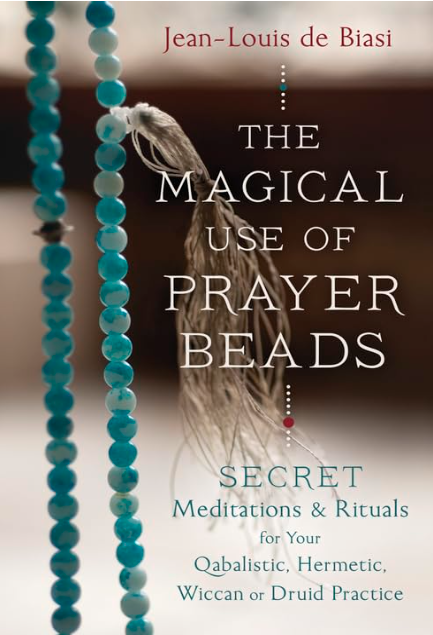
A) The prayer bead has a strongly theurgical and initiatory orientation. His discussion emphasizes divine contact, correspondence, ritual structure, consecration, and progressive spiritual development. He explicitly relates prayer beads to traditions such as Hermeticism, Christian Qabalah, Wicca, and Druidism.
B) By contrast, approaching the rosary primarily through Pagan devotional practice is a widespread common practice. Their work is concerned with designing and constructing rosaries, selecting materials and symbols, and incorporating them into Druidic, Wiccan, and other Pagan or Gnostic forms of prayer and meditation.
The two approaches nevertheless converge on a crucial point: the effectiveness of prayer beads depends upon structured repetition combined with meaningful symbolism.
The rosary becomes more than an aid to counting. It becomes a material framework for cultivating devotional consciousness.
From Counting to Transformation
Now, let’s consider the mechanics of the use of prayer beads:
- The movement of the fingers from one bead to the next may appear mechanically repetitive. Within a theurgical framework, however, repetition is precisely what makes transformation possible.
- Each bead marks a moment of attention.
- Each prayer reinforces a symbolic association.
- Each repetition establishes continuity.
- And the completed sequence provides a ritualized movement through a symbolic cosmos of colors, materials, numbers, and symbolic geometrical shapes and patterns.
The practitioner therefore moves simultaneously through physical space, temporal sequence, symbolic meaning, and interior consciousness.
This is why prayer beads are particularly interesting from a Western Esotericism perspective. They demonstrate how esoteric practice can operate through the convergence of material culture, embodied cognition, symbolic correspondence, devotional praxis, and soteriological aspiration.
The bead does not possess significance in isolation. Its significance emerges from the relationship among the object, the practitioner, the prayer, the symbol, and the cosmological framework that shapes the ritual’s interpretation.
Conclusion
Prayer beads can therefore be understood as a compact form of theurgical technology that directs consciousness toward divine realities through prayer, repetition, correspondence, consecration, and ritual practice.
Pagan or Gnostic rosaries provide a comparable material structure for devotional and meditative practice within contemporary traditions by using the previous dynamics (repetition, correspondence, consecration, and ritual practice)
Their importance lies precisely in the fact that they unite what modern categories often separate: body and mind, matter and spirit, symbol and action, devotion and ritual, contemplation and transformation.
The prayer bead is therefore not simply an instrument for counting prayers.
It is a mediating technology.
Through its repetitive movement, symbolic architecture, material presence, and devotional use, it helps the practitioner transform an abstract cosmology into embodied practice.
In the theurgical perspective, the ultimate purpose of this practice is not the accumulation of repetitions but transforming the relationship between the practitioner and the divine.
The rosary begins as an object held in the hand and, through its ritual use, it becomes an instrument of attention, devotion, and a symbolic magical tool. In the theurgical context, it becomes a means through which the human subject seeks to participate consciously in the Divine Work.
Recommended reading
Our Rosaries
-
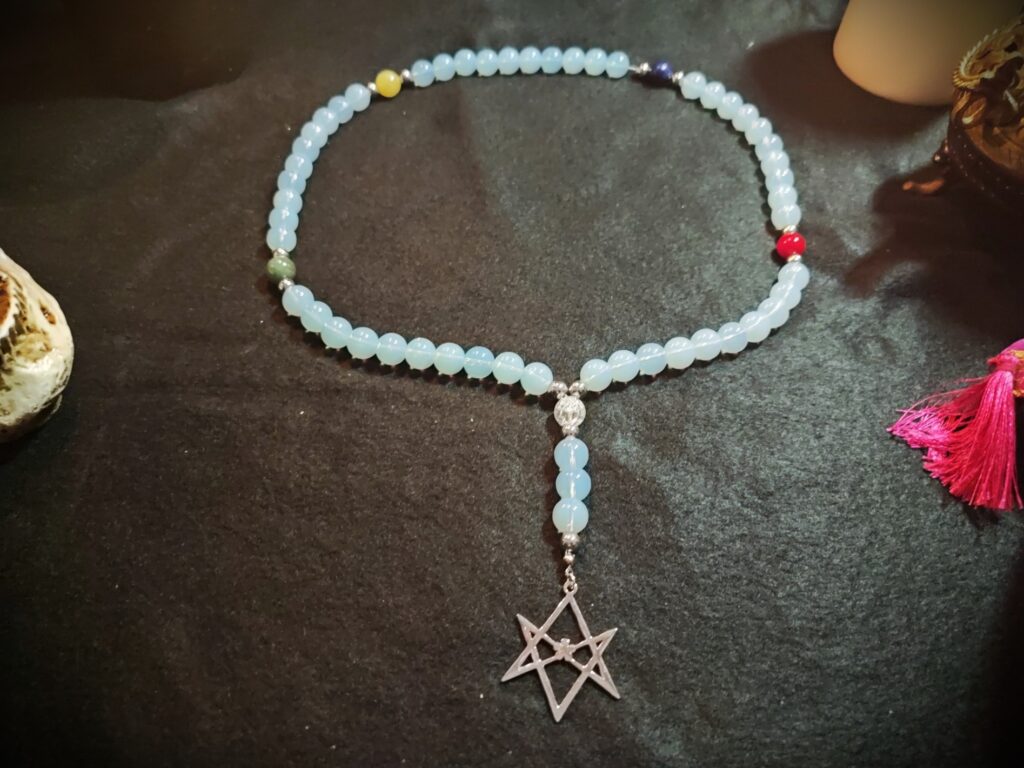
Golden Dawn Rosary
Original price was: 280,00 zł.180,00 złCurrent price is: 180,00 zł. -
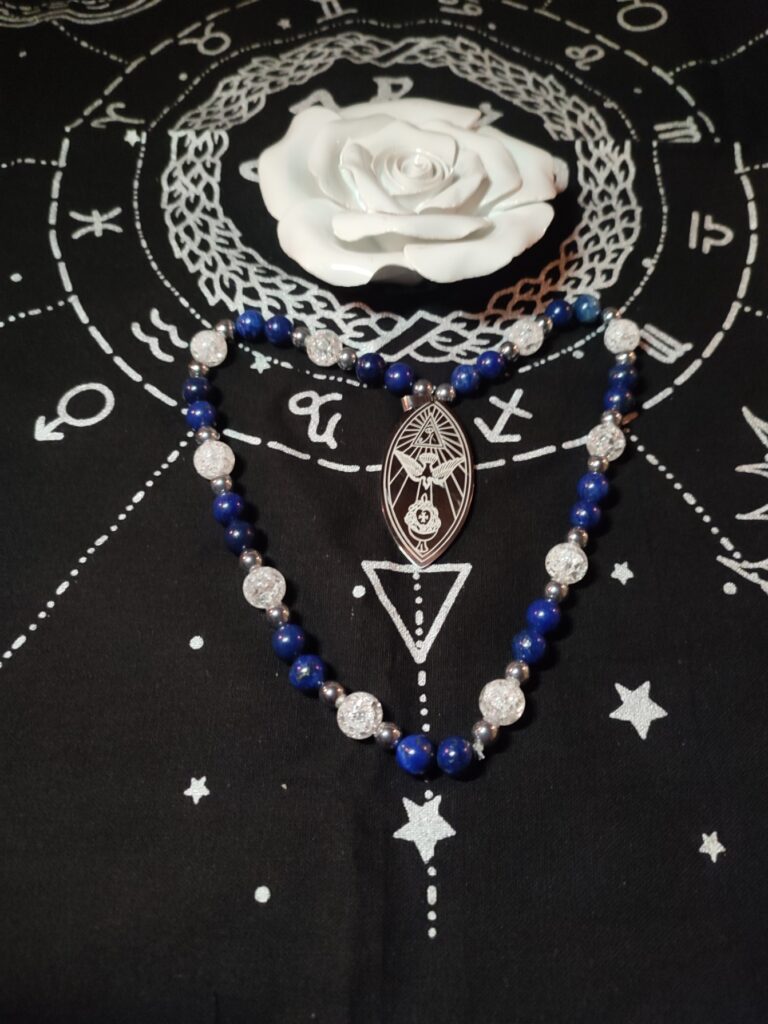
Hierogamia Rosary
Original price was: 269,00 zł.169,00 złCurrent price is: 169,00 zł. -
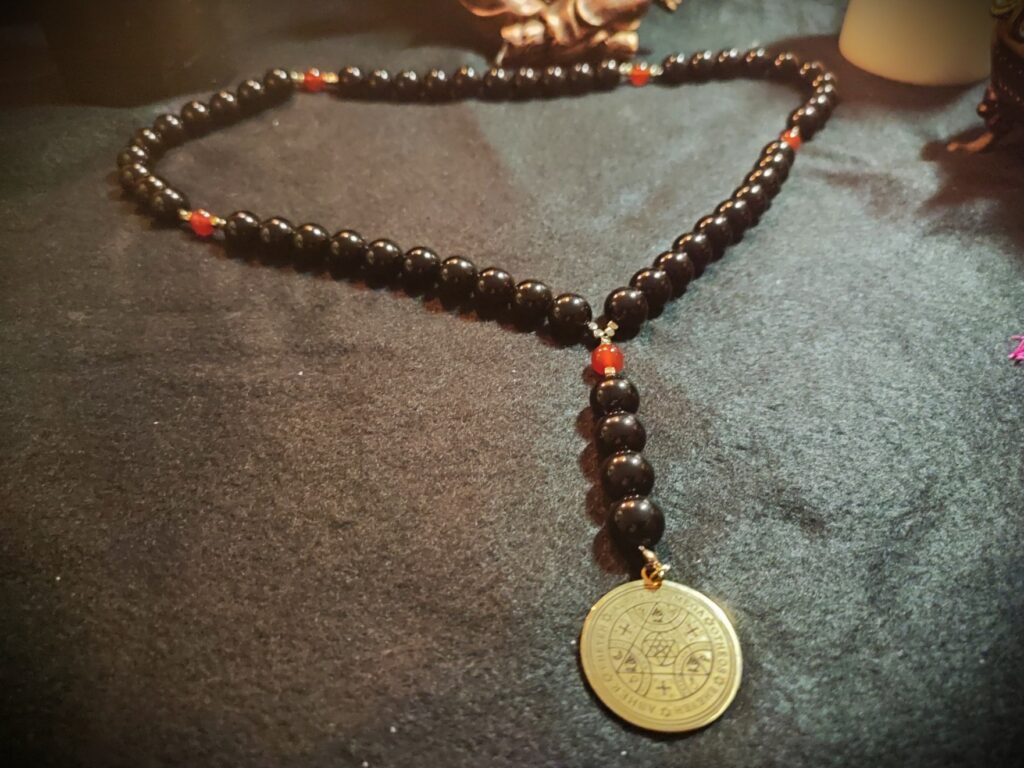
Kabbalistic Rosary
Original price was: 330,00 zł.230,00 złCurrent price is: 230,00 zł. -
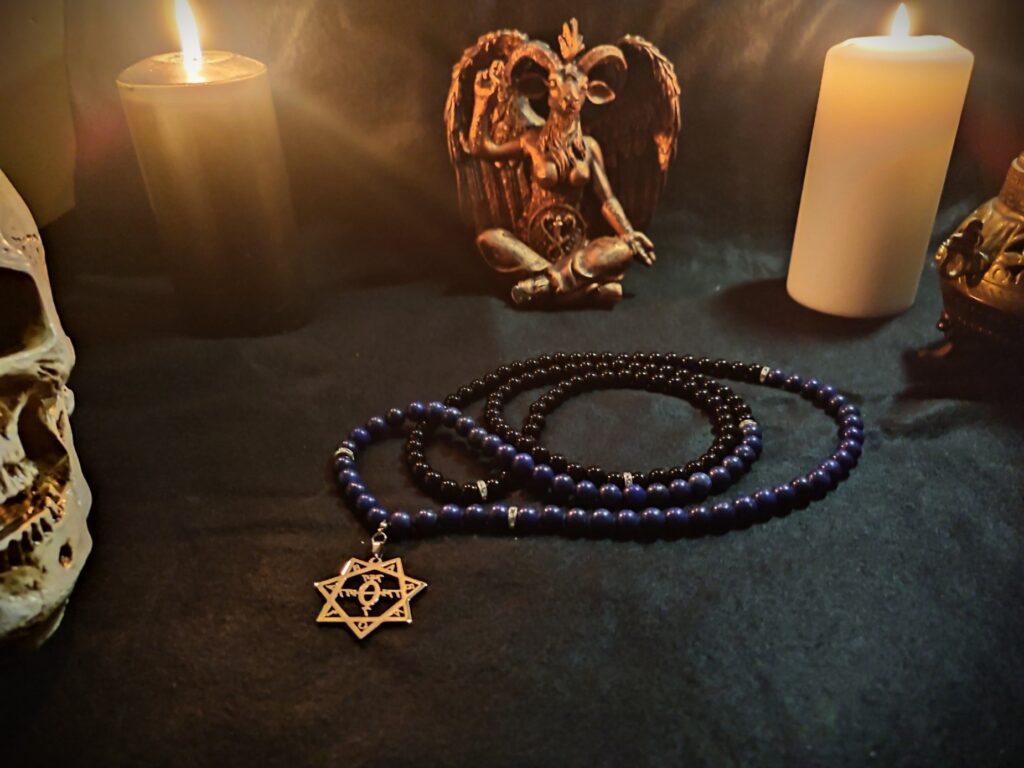
Thelemic Rosary
Original price was: 350,00 zł.250,00 złCurrent price is: 250,00 zł.