When we speak of the Tarot as an instrument of initiation, we must also distinguish this conception from its modern use, primarily as a system of divination. Within a particular stream of Western esotericism, the 22 Major Arcana of the Tarot have been interpreted quite differently and not principally as a means of predicting events, but as a symbolic technology for the transformation of the practitioner. This view was acknowledged by Gerard Encausse, Oswalt Wirth, McGregors Mathers, Arthur E. Waite, and Aleister Crowley.
But today, we’ll bring up some unusual mentions related to the Hermetic contribution of the Circle of Students of Mebes.
Three authors are particularly important to mention in the context of the Tarot as a system: G. O. Mebes, Nina Rudnikova, and Valentin Tomberg. Although they belong to different moments and articulate their systems differently, their works share a fundamental premise: the twenty-two Major Arcana approached as a structured sequence of symbolic forms through which the practitioner engages in a process of inner development. Of course, we do not dismiss the extensive work of Paul Foster Case, Franz Bardon, or Pierre Lasenic. (among others)
The first mention is Grigori Ottonovich Mebes, from whose series of lectures on the general theory and practice of occultism in St. Petersburg between 1911 and 1912 were later compiled into the book: The Encyclopedia of Occultism: Hermetic Initiation Through the Major Arcana of the Tarot, 2025, by Yuri Pankratov. The recent English edition presents the work explicitly in terms of Hermetic initiation and connects the Major Arcana with Kabbalistic, magical, and Hermetic cycles.
What is particularly significant in Mebes is that the Tarot becomes a pedagogical technology for occult philosophy. He viewed the Tarot strictly as a rigorous instructional framework and explicitly rejected its use as a mundane tool for fortune-telling or divination. As a professor of mathematics and physics, Mebes brought a highly structured, analytical mind to occultism. He approached the Tarot as a psychological and metaphysical technology designed to systematically organize the human mind for Hermetic initiation.
The Arcana function as stages and principles through which the student is introduced to a larger cosmological and anthropological system (similarly to Franz Bardon’s work). Each card of the major Arcana becomes a point of access through which the student can contemplate and progressively work on integrating that principle. This distinction is crucial for understanding the expression “technology of initiation.”
Technology here does not mean technology in the modern mechanical sense. It refers to an organized method of producing a particular transformation through a sequence of operations. The Tarot becomes technological because it structures attention, contemplation, symbolic association, and self-reflection according to an ordered system.
In this sense, the Tarot functions also as an epistemic technology: a technology for producing knowledge through symbolic engagement.
The second author, Nina Rudnikova, develops this conception in The Solar Way: A Guide to Hermeticism Using the Tarot Major Arcana. It was republished in English by Aeon Books in 2025. The original title of the book in Russian is Солнечный путь (Solnechny put), which literally translates to “The Solar Way,” and it was published in 1936. Depending on the specific posthumous print run and modern publisher in Russia, it has been released under extended descriptive titles such as:
- «Солнечный путь. Арканы Таро» (The Solar Way. Tarot Arcana)
- «Сакральный мистицизм Египта. 22 ступени солнечного пути» (Sacred Mysticism of Egypt. 22 Steps of the Solar Way)
The book explicitly presents the twenty-two Arcana as twenty-two steps of esoteric initiation. Rudnikova studied under Mebes, and therefore, the book belongs to this particular Hermetic-Martinist transmission.
Rudnikova is especially important because she makes the Tarot’s initiatory structure exceptionally explicit.
Her title, The Solar Way, already suggests that the Tarot is being interpreted as a path. The twenty-two Major Arcana are treated as stages within an ordered movement of consciousness. The practitioner encounters questions concerning the macrocosm and microcosm, human evolution, spiritual hierarchies, occult initiation, the training of the mind, and what the book describes as the Path of Liberation. Here the Tarot can be understood as a technology of interiorization and the external image becomes an internal operation.
The practitioner contemplates the symbol, establishes relationships between its elements, associates it with broader Hermetic principles, and gradually converts an apparently external image into an interior mode of cognition. This is characteristic of esoteric epistemology: knowledge is not understood exclusively as the accumulation of propositions. It must also be realized.
Consequently, the Tarot becomes an instrument through which symbolic knowledge is intended to become transformative knowledge.
The third author, Valentin Tomberg, another student of Mebes, takes this process in a somewhat different direction. In his work, Meditations on the Tarot: A Journey into Christian Hermeticism, which was originally published in French in 1980, the concept of Initiation is redefined not as a Secret Doctrine imparted by human masters or secret societies, but as a direct, mystical relationship with the divine.
He views the Major Arcana as authentic spiritual symbols and “ferments” that awaken the soul’s moral and psychic faculties through profound contemplation rather than intellectual study. He places the Tarot within a Christian contemplative and hermeneutical framework, but Christian Hermeticism relies on no human initiators (same view as Eckhartchaussen). Instead, seekers are viewed as fellow pupils with only one sole spiritual master. Ultimately, the Tarot serves as a tool of inner concentration designed to prepare the soul for a conscious awakening to God.
It subsequently became one of the most influential twentieth-century works connecting the Major Arcana with Christian Hermeticism, and Tomberg treats them as objects of profound meditation. An English translation was then published in 1985, with Robert A. Powell basing his rendering on the author’s original French manuscript.
He considers the process of Initiation as follows:
1. The Starting Point: Entering the “Night of the Soul”
Tomberg states that you must take a card into solitude and silence, immersing your mind in a dark, quiet meditative space—what he compares to the mystical “night” described by St. John of the Cross.
2. Moving from Concept to Living Symbol.
Tomberg explains that an ordinary secret can be explained with words, but an arcanum cannot. The symbols on the Major Arcana act as psychic organs or archetypes.
- You do not “study” the card; you look at it until the symbol begins to work on your deep, unconscious layers.
- The image transitions from a static picture into an active “symbol-force” within your mind.
3. Activating the Four Vertical Stages of the Mind
As you progress through the cards, your mind experiences a vertical ascent. Tomberg structures this psychological alignment into four progressive states:
- The Magician (Arcanum I): Concentration without effort. You learn to focus purely on the spiritual realm without dynamic mental strain.
- The High Priestess (Arcanum II): Revelation. The quiet mind becomes a mirror capable of receiving hidden spiritual truths.
- The Empress (Arcanum III): Sacred Magic. The truth you received becomes a creative power, letting you act with divine alignment.
- The Emperor (Arcanum IV): Authority. Spiritual power is fully consolidated into your personal character and earthly reality.
4. Integration via the “Individuation” Journey
The final phase of direct initiation is the ultimate reconciliation of your outer conscious self with your inner spiritual depth. Tomberg heavily integrates Carl Jung’s concept of individuation into this process. Each card forces a confrontation between your conscious mind and your unconscious archetypes.
Up to here, we find that:
- In Mebes, we can see a strongly structured Hermetic-occult pedagogy.
- In Rudnikova, this becomes an explicit path of esoteric development.
- In Tomberg, the same symbolic architecture is transformed into a form of Christian Hermetic contemplation.
The three authors therefore demonstrate that “Initiation” does not necessarily signify one standardized ritual event. It can also designate a gradual transformation in the mode through which the practitioner perceives, interprets, and participates in reality. Also, they agree that the Tarot operates through mediation.
From the perspective of Western Esotericism, this is especially significant. The Tarot is not functioning as an isolated symbolic language. It participates in a broader esoteric tendency to perceive reality as structured through analogies, correspondences, and multiple levels of meaning, which also provides an interface of correlation between macrocosmic and microcosmic realities for a dynamic transformative process of human evolution and self-empowerment.
The technology provided by the Tarot is not merely symbolic; it is also performative, and it is expected that the practitioner do something with the symbol: contemplate it, meditate upon it, internalize its relationships, and allow it to reorganize perception. The purpose is therefore not simply interpretation but transformation.
Recommended reading from our topic:
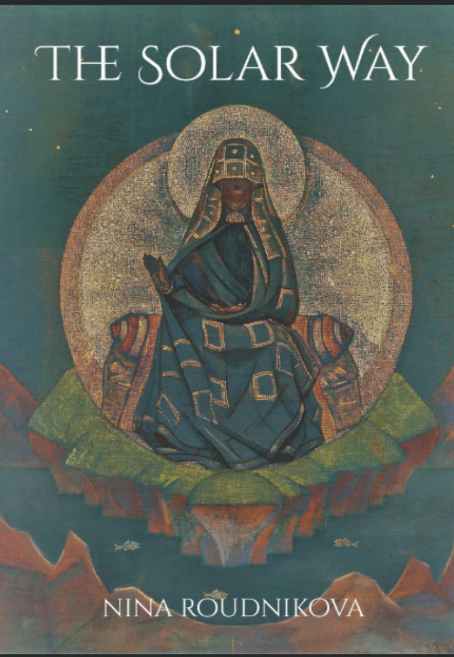
The Solar Way
Nina Pavlovna Roudnikova (1890-1940) has created a work which radiates with all the fullness of the Nineteenth Arcanum, traditionally called The Sun and also known as The Great Work, The Philosopher’s Gold – or Stone – and Synthetic Philosophy.