There’s no Great Work if only for ourselves.
When we speak of theurgy, we often imagine a highly individual spiritual practice: prayer, invocation, meditation, sacred symbols, ritual, and the attempt to establish a relationship with the divine. Yet in both the ancient theurgical tradition and later Western esotericism, we can understand the purpose of such practices more broadly.
Theurgy is not necessarily concerned only with transforming the practitioner. It can also be understood as a practice oriented toward collective benefit.
The term theurgy, “Divine Work or God-Working”, belongs especially to the late Neoplatonic tradition associated with Iamblichus and Proclus. Ancient theurgists understood ritual, prayer, sacred names, symbols, and other practices as means through which the human being could participate in a Divine order. Modern scholarship emphasizes that theurgy was understood not simply as “magic,” but as a set of practices intended to establish or restore a relationship between the human soul and the divine.
This distinction matters because the practitioner is transformed to become an instrument of transformation or co-participant in the Divine Work.
In Proclus, for example, theurgical practice operates on several levels. Some forms were associated with practical effects such as healing; others concerned the ascent of the soul toward the divine intellect; and the highest forms concerned union with the first principles. Prayer and hymnody could therefore participate in a larger process of purification, elevation, and divine participation. But let’s read his view regarding the responsibility towards a collectivity:
“…a philosopher should watch over the salvation of not only a city, nor over the national customs of a few people, but that he should be the hierophant of the whole world in common”. Marinus of Samaria’s biography, Life of Proclus (Chapter 19)
If the practitioners use a ritual instrument to convey collective healing and peace and to cultivate compassion and empathy towards others, in reality they are co-participating in a Divine work of the Gods.
This brings us directly to the Rosicrucian Manifesto of the early seventeenth century and the values of the movement.
ROSICRUCIAN VALUES AND PRINCIPLES.
The Fama Fraternitatis, published in 1614, presents the legendary fraternity of Christian Rosenkreuz as a community devoted not simply to acquiring secret knowledge, but to applying knowledge for human benefit. One of the fraternity’s defining commitments is the healing of the sick without payment. The manifesto therefore connects esoteric knowledge with an ethic of service.
This is an extremely important point. The Rosicrucian adept is not portrayed merely as someone who possesses hidden knowledge.
The Confessio Fraternitatis, published the following year, expands this vision by associating the fraternity with a broader reformation of knowledge, philosophy, religion, and society. The Rosicrucian brotherhood can therefore be interpreted as a movement from illumination toward collective benefit and transformation.
The practitioner seeks knowledge of nature, the human being, and the divine order, and not merely for personal distinction, but so that knowledge can become useful. This gives us a useful way to understand the relationship between theurgy and service:
a) Theurgy begins with transformation of consciousness.
b) Transformation produces greater alignment with the divine.
c) Practitioners then understand that alignment as creating the possibility of becoming a divine agent of healing, reconciliation, wisdom, justice, or consolation.
In other words:
Theurgy transforms the practitioner so that the practitioner can participate in the transformation of the world. Frater Ioannes.
This should, of course, be expressed carefully. These are claims and ideals found within the traditions themselves; they are not empirical demonstrations that ritual invocation produces supernatural healing. The historical significance lies in how practitioners understand the relationship between ritual practice, spiritual transformation, and service.
The Rosicrucian Manifestos make this relationship particularly striking because the ideal of service is built into the legendary identity of the fraternity. The Fama does not define the brothers primarily through their clothing, social status, or institutional power. Instead, one of their defining obligations is precisely to heal and serve.
True Initiates descend into the symbolic world, undergo purification and transformation, and then bring the fruits of that transformation into ordinary existence.
The Rosicrucian Chymical Wedding expresses this process through a radically different literary form: an initiatory journey involving trials, transformation, death, rebirth, and the symbolic marriage of opposites.
The Rosicrucian manifestos therefore present complementary dimensions of the Rosicrucian ideal: reformation, knowledge, and transformation. Seen in this light, theurgy is not simply an attempt to obtain something from the divine: It is a form of participation in the divine work.
The practitioner prays, invokes, contemplates, and performs ritual not only to become more spiritually developed, but to become more capable of embodying qualities that can benefit others.
This is why the Rosicrucian principle of healing is so significant.
It gives the abstract concept of spiritual illumination a practical direction.
- The purpose of knowledge is service.
- The purpose of purification is greater receptivity.
- The purpose of initiation is transformation.
- And the purpose of transformation is, ultimately, benefit for all.
In this sense, theurgy can be understood as a movement from the self, through the divine, and back toward the world. The practitioner does not disappear from the human community by approaching the divine. Ideally, the practitioner always is turning to the world, bringing something to give.
And perhaps this is one of the most profound ideas shared by the theurgical and Rosicrucian traditions: the spiritual path reaches its highest expression not when the practitioner possesses more, but when what has been received can become a source of healing, wisdom, and service to others.
RECOMMENDED BOOK ON THE TOPIC!
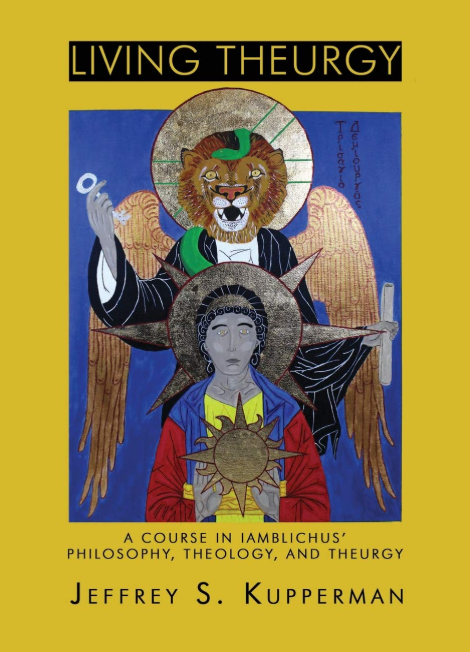
Living Theurgy is a masterpiece combining scholarly excellence with lucid practicality. Theurgy (‘god-working’) is a combination of ritual mystical practices interwoven with philosophy and theology.